NCDA&CS is moving forward with mortality management, regardless of FEMA’s assistance. The Department has been diligently working to sign contracts and putting procedures in place to support composting and landfill tipping fees. Growers should work through their integrator or reach out to the Ag Disaster Hotline (866.645-9403) if they have not already done so.
- Rendering
- Land-filling
- Incineration
- Composting
- Burial (below or above ground)
- Alkaline Hydrolysis
For more information, please refer to Mass Animal Mortality Management Plan for Catastrophic Natural Disasters (NCDA&CS)
Composting requirements
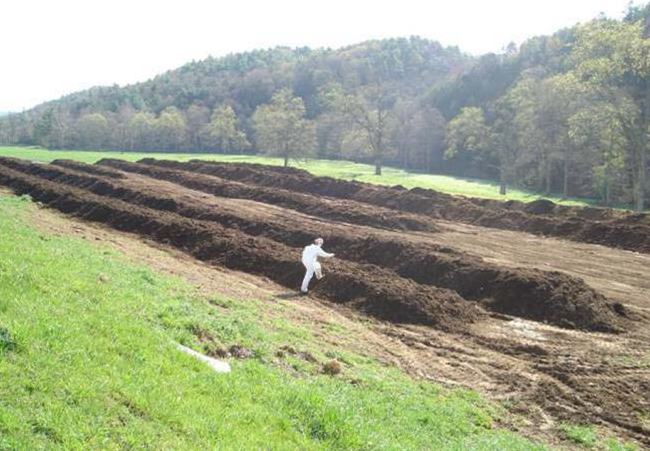
Mass mortality composting is the best on-site disposal option. It utilizes aerobic bacteria to decompose the mortality, reduce odors and destroy pathogens. The process duration varies from 1 month for poultry mortality up to 6 months for larger animals. After successful composting, the material can be safely applied to crop fields and pasture land.
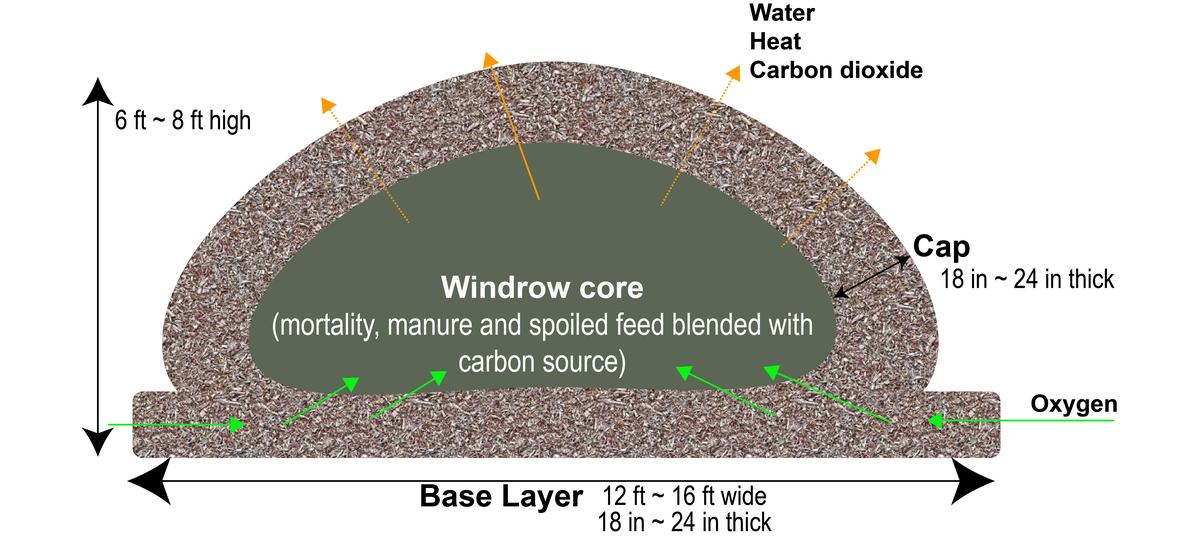
Mortality composting requires:- Trained composting experts: The Animal and Plant Health Inspection Service agency (APHIS) of the U.S. Department of Agriculture (USDA) trains subject matter experts (SME) on mortality composting. SMEs are dispatched by the NCDA&CS to guide house clean-out, windrow construction, assess composting and verify process completion.
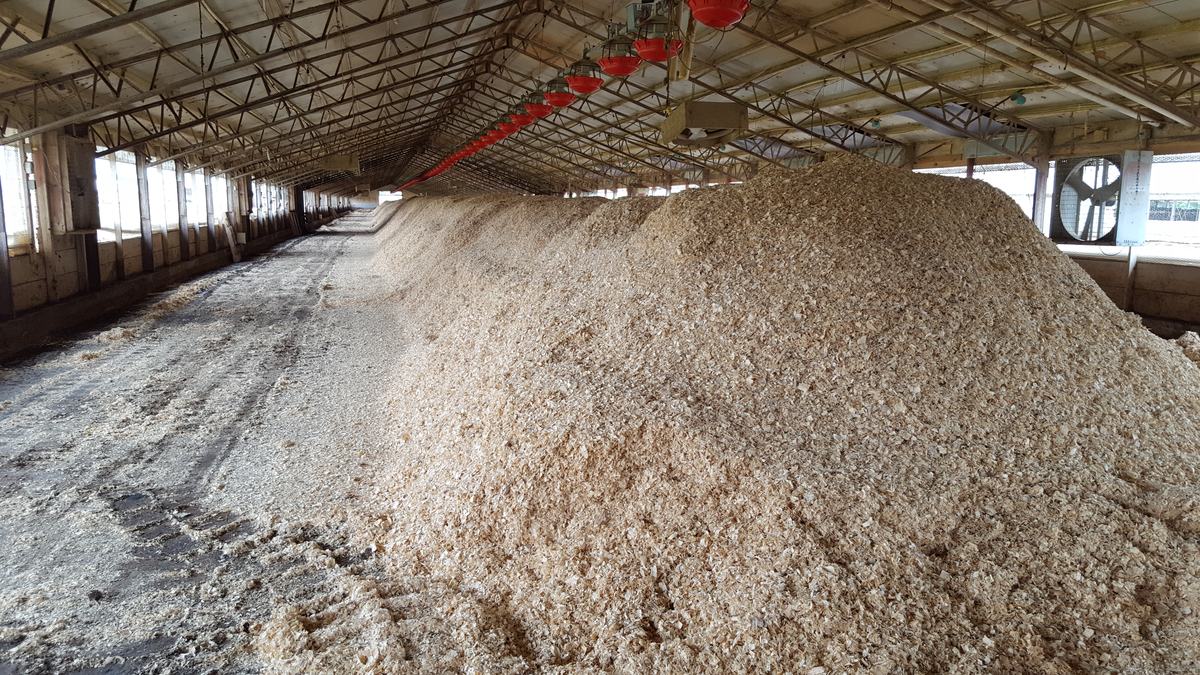
- Dry carbon source: mortality composting requires sufficient amounts of material with biologically available carbon. Example of these sources include wood chips, shavings, chopped hay/straw, small grain hulls. Note that Some carbon-rich materials, such as demolition waste, painted and treated wood have poor wetting properties and cannot be used for composting. Bermuda grass although abundant does not constitute a favorable carbon source due to (1) high moisture content, and (2) inability to improve airflow in compost mix.
- Suitable site: this could be the poultry house itself or land with recommended setbacks from residential areas and water resources. For details on setbacks for outdoor composting please refer to N.C. Guidance for Composting of Mass Animal Mortality (NCDA&CS).
- Handling equipment with trained operators: Equipment such as skid steers, tractors with trained operators are required to clean the houses, blend the carbon sources, construct and turn the composting windrows.
Steps to flood mortality composting:
- Assess damage to the flooded house(s) by inspecting the depth of muck (dead animals, bedding, and standing water) in the houses.
- Ensure no effluent from flooded houses reach streams or wells. You can achieve this by building a barrier of carbon material to stop/divert effluent flow.
- Add a layer of carbon source to the flooded house and let stand for one to two days (ventilate the house if power is available to speed the drying process).
- Use skid steers and tractors to form two windrows inside the house against the walls. Add carbon material if needed to achieve 60% to 70% moisture content.
- Prepare larger animals (i.e., finishing pigs mortality) by puncturing abdominal cavity to speed the composting process.